7.1 UCD
7.1 User-Centred Design
User centred design: understanding the needs of the users is the key to designing the best products and services.
UCD & the User, Tasks and Environments
 User
User
- UCD pays attention to the needs of the user. It considers how users are likely to use the product and tests the product with actual user.
- Emphatic design - user-centred approach puts the design team in direct contact with the people they are designing for, to empathise with potential users and gain a better understanding on their needs, thought etc.
- Functions can be added easily and cheaply but too many can reduce its usability.
Task
- Takes into account common tasks. Important tasks functions are easily recognised.
- Ticketing vending machines, ATM.
- Interface should be a standard, it should be able to perform the task easily and efficiently.
- Important functions are easily recognised.
 Environment
- Environments like open plan office, car or kitchen.
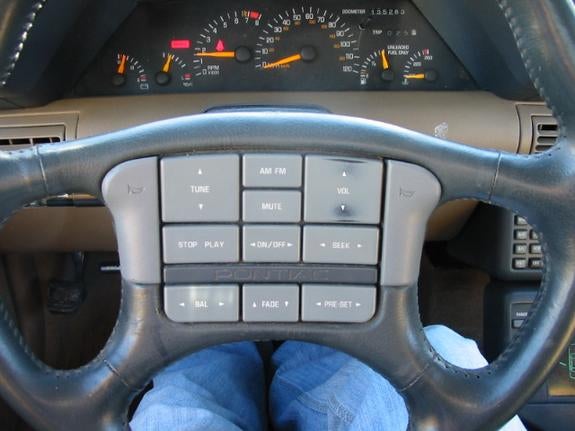
- Car, car window controls on the door, stereo controls on steering wheels.
- Takes into account in the use of a product in a particular environment.
- Cars -Layout of controls promote efficiency and safety ~Stereo controls on the steering wheel ~Car windows controls at the door
The process is iterative, led by the user and developed through user-centred evaluation.
UCD is iterative (not everything is achieved at one time) just like design cycle. Here though emphasis is on the user throughout the product design cycle. user is consulted and modifications are made until the consumer requirements are met. Then it is released.

Five stages of UCD:
-Research
User goals, competitor comparisons, questionnaires
-Concept
Paper prototypes, usability testing, expert evaluation
-Design
Scaled models, monitoring of performance against usability requirements
-Implementation
Various testing, evaluation is fed back into design cycle, expert evaluation
-Launch
End product is launched, continuous evaluation is carried out

Paper prototype
UCD design teams
anthropologists, ethnographers, engineers, psychologists and focus groups to advise the creative designer
- Anthropologists -treat human society as a field of science and want to know why things happen -consider -e.g how to tackle overpopulation, warfare and poverty
- Ethnographers -have direct interaction with people to gather and record data about human culture and societies -they often need to be able to find patterns in and understand issues faced by a wide sample of people with diverse backgrounds
- Physiologists -they are concerned with the assessment, diagnosis, treatment and prevention of mental disorders. -often work in medical settings, clinical psychologists are not medical doctors, nor can the prescribe anything
The product must address the whole user experience
it is very much dependent on the designer's understanding of the task, users and environment.
The elements need to be researched
- Usability -Ease of use and learnability
- Usability experiences -Usability, productivity, effectivity, likability
- User experiences -A person's perceptions and responses from the user of a product. (e.g simplicity, low memory burden, feedback etc.)
Inclusive Design
Inclusive design requires designing universally accessible products for all users including those with physical, sensory, perceptual, and other challenges and impairments.
- Inclusive design is important because: -future consumer markets will be more diverse than ever in terms of age and physical ability. ~demographic change is a major challenge to designer, with growing numbers of people with disabilities and ageing populations are having profound effect on new product and service development. -responsive to people's needs, hence easy for everyone to use. -low memory burden -convenient
UCD & the User, Tasks and Environments
 User
User- UCD pays attention to the needs of the user. It considers how users are likely to use the product and tests the product with actual user.
- Emphatic design - user-centred approach puts the design team in direct contact with the people they are designing for, to empathise with potential users and gain a better understanding on their needs, thought etc.
- Functions can be added easily and cheaply but too many can reduce its usability.
- Takes into account common tasks. Important tasks functions are easily recognised.
- Ticketing vending machines, ATM.
- Interface should be a standard, it should be able to perform the task easily and efficiently.
- Important functions are easily recognised.
 Environment
- Environments like open plan office, car or kitchen.
- Car, car window controls on the door, stereo controls on steering wheels.
- Takes into account in the use of a product in a particular environment.
- Cars -Layout of controls promote efficiency and safety ~Stereo controls on the steering wheel ~Car windows controls at the door

Five stages of UCD:
-Concept
Paper prototypes, usability testing, expert evaluation
-Design
-Implementation
-Launch
 |
| Paper prototype |
UCD design teams
anthropologists, ethnographers, engineers, psychologists and focus groups to advise the creative designer
- Anthropologists -treat human society as a field of science and want to know why things happen -consider -e.g how to tackle overpopulation, warfare and poverty
- Ethnographers -have direct interaction with people to gather and record data about human culture and societies -they often need to be able to find patterns in and understand issues faced by a wide sample of people with diverse backgrounds
- Physiologists -they are concerned with the assessment, diagnosis, treatment and prevention of mental disorders. -often work in medical settings, clinical psychologists are not medical doctors, nor can the prescribe anything
The product must address the whole user experience
it is very much dependent on the designer's understanding of the task, users and environment.
The elements need to be researched
- Usability -Ease of use and learnability
- Usability experiences -Usability, productivity, effectivity, likability
- User experiences -A person's perceptions and responses from the user of a product. (e.g simplicity, low memory burden, feedback etc.)
Inclusive Design
Inclusive design requires designing universally accessible products for all users including those with physical, sensory, perceptual, and other challenges and impairments.
- Inclusive design is important because: -future consumer markets will be more diverse than ever in terms of age and physical ability. ~demographic change is a major challenge to designer, with growing numbers of people with disabilities and ageing populations are having profound effect on new product and service development. -responsive to people's needs, hence easy for everyone to use. -low memory burden -convenient

Comments
Post a Comment