8.1 Sustainable development
8.1 Sustainable development
Essential Idea: Sustainable development is concerned with satisfying human needs for resources now and in the future without compromising the carrying capacity of the planet.
 Triple bottom line
The concept of the triple bottom line means that business success is no longer defined only by monetary gain but also by the impact and organisation's activities have on society as a whole - Environmental, Economic and Social.

Environmental Aspect of TBL
- It is technically possible to deliver equivalent goods and services with lower environmental impact while maintaining social and equity benefits.
- Involves maintaining the ecosystem by optimising(using) its resources more prudently. -Redesigning production system to be more efficient. -Maintaining ecosystem integrity -Assess and work within the carrying capacity (the size of a population that an ecosystem can support without degradation of social, economic and environmental systems) -Recognising and maintaining biodiversity.
- Historically economic prosperity increases so environmental quality decreases.

Social Aspect of TBL
- There is a correlation between economic development and human well-being.
- Social sustainability: -Designing to develop goods and services for the enhancement of human well-being. -Maintaining cultural identity. -Empowerment of local communities. -Accessibility to resources and services. -Social and gender equity -Stability of communities not placing them in upheaval. -Health adjusted life expectancy.
- Economic development increase the GDP and spending power of people this results in consumption of resources leading to a negative environmental impact.
- Designing for sustainability is dependent upon an understanding if the short and long term goals and values of individuals, institutions and governments.
- It is about the big picture that allows economic activity to rise while: -Reducing resource use and reducing environmental impact. -Maintaining economic growth -Development -Improving productivity -Facilities the economic trickle-down affect to local communities -Job growth -Employment distribution by sector
Decoupling
It is a strategy for sustainability.
- It refers to disconnecting economic growth & environmental impact so that each other no longer depends on the other.
- Through decoupling (using resources more productively and redesigning production systems), it is possible to deliver the same goods and services with lower environmental impact while maintaining social and equity benefits.
- Resource decoupling means getting more efficiency from the resources we use, so that we can extend the life of natural resources.
- Impact decoupling means using processes that leave smaller footprint on ecosystem.

International Laws to promote sustainable development
The use of international and national laws to promotes sustainable development.
- International and national laws encourage companies to focus on something other than shareholder value and financial performance.

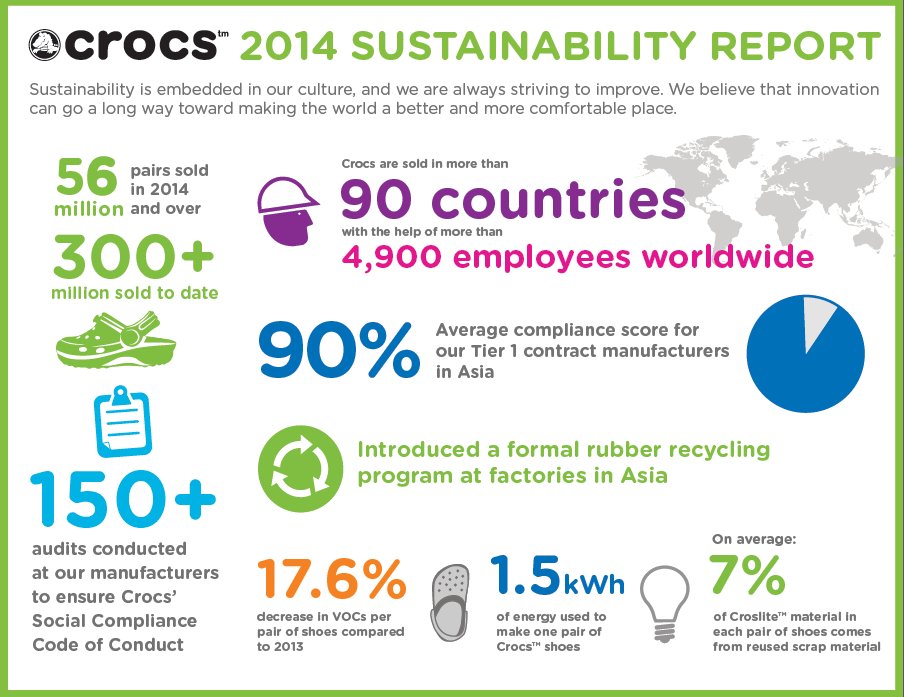
Sustainability reporting
It is a company report that focuses on 4 aspects performance. Sustainability report is a vital step towards achieving a sustainable global economy.-Economic
-Environmental
-Social
-Governance The reliability and acceptance of sustainability requires accurate data gathering to be maintained over time.
- Benefits for:
Governments Manufacturers Consumers
- the information can be used to assess the impact on the economy, society and the environment
- transparency, see what issues are being tackled
- with the information can target areas of concern and help drive progress on sustainability
- compliance with legislation
- can drive innovation (product or systems) within an organisation
- can use it as marketing
- enhanced branding/reputation
- potential cost savings
- efficient governance and management
- potential cheaper products or services
- potential for more innovative products or services
- builds trust in that organisation
- information can assure the consumer that it is globally and nationally employing sustainable practises and strategies
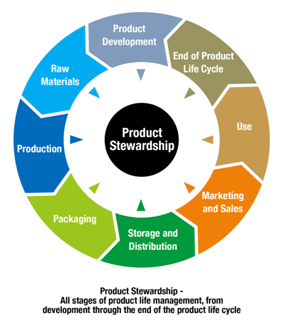
Product stewardship
- Everyone involved in making, selling, buying or handling equipment (products) takes responsibility for minimising environmental impact of the equipment at all stages in the life cycle.
- Designers may need to respond to consumer pressure, as more consumers become aware of resource issues and product labelling.
- Some examples are : Organic foods and genetically modified food.


Comments
Post a Comment